Custom Electric
Azimuth Thrusters
up to 525 kW
Azimuth thrusters for precise manoeuvring and efficient propulsion
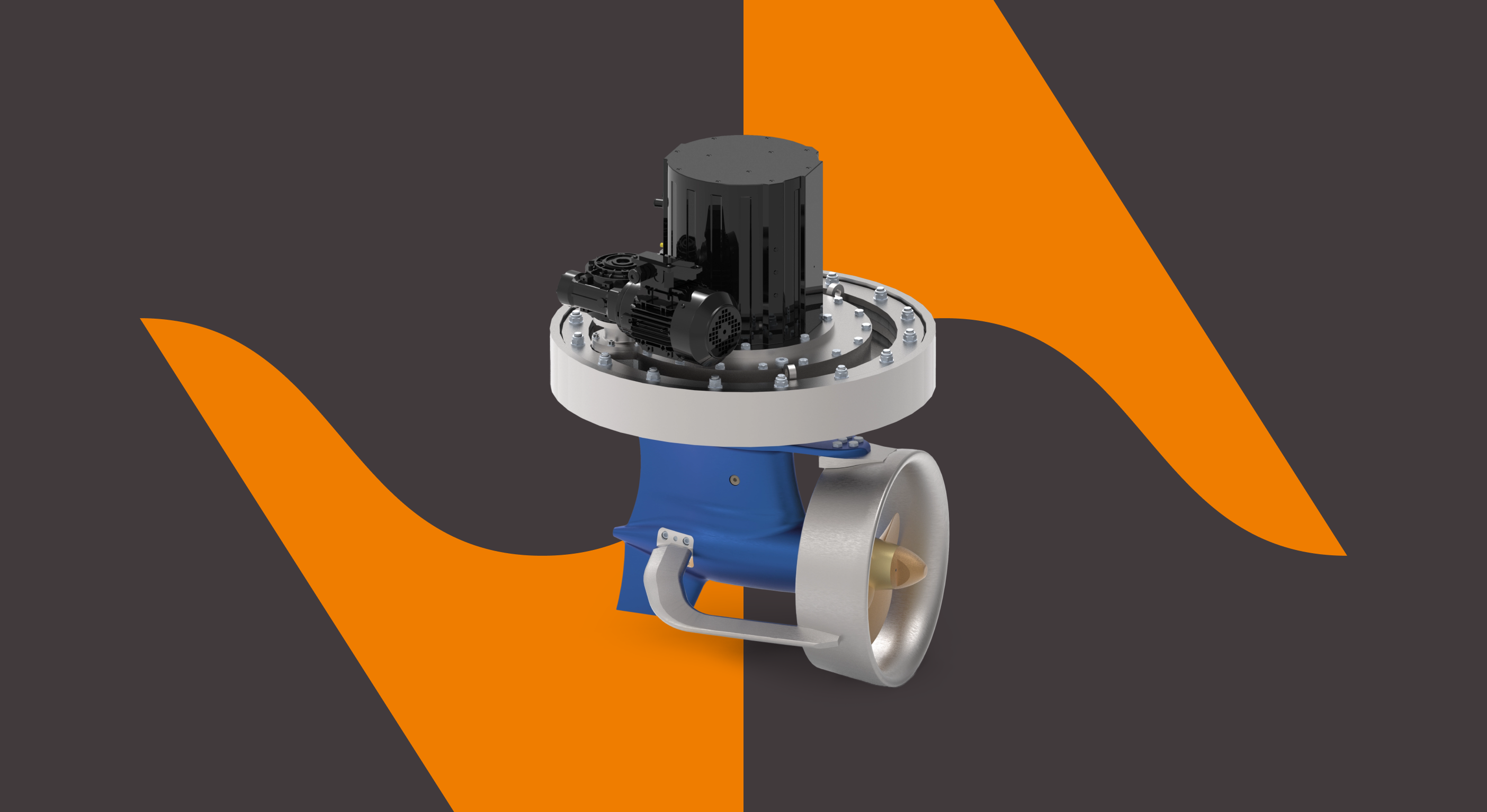
Current Motion delivers electric azimuth thrusters that give vessels the power, control and flexibility they need in daily operation. Designed for 360-degree thrust, compact integration and reliable electric propulsion, our systems help improve manoeuvrability, efficiency and onboard comfort.
Where azimuth thrusters makes the difference
An azimuth thruster integrates propulsion and steering into a single system. Because the thruster can rotate 360 degrees, the vessel can be manoeuvred with a high degree of precision. This makes azimuth thrusters ideal for vessels that require direct control, efficient propulsion and reliable performance in demanding conditions.
At Current Motion, every thruster is designed around the vessel, the application and the operational profile. From yachts and ferries to workboats and other professional vessels, we engineer solutions tailored to the specific requirements of each project.
Benefits of azimuth thrusters
360-Degree rotational capability
Direct thrust in every direction for precise docking, positioning and low-speed control.
Efficient electric propulsion
Designed for electric applications, helping vessels move towards more flexible and future-ready propulsion.
Compact integration
A space-efficient propulsion solution that combines steering and thrust in one system.
High thrust-to-power ratio
Engineered to deliver strong propulsion performance and efficient use of available power.
Low-noise operation
Designed with comfort and quiet operation in mind, especially valuable for yachts, passenger vessels and vessels operating in urban or sensitive environments.Tailor-made engineering
Tailor-made engineering
No vessel is the same. That is why Current Motion designs thruster solutions around the vessel’s specific requirements.
Technical
overview
Current Motion azimuth thrusters are available for a wide range of vessel types and applications. The right configuration depends on factors such as vessel size, operating speed, available space, required thrust, propeller diameter, control system and energy source. Instead of offering a one-size-fits-all solution, Current Motion engineers each thruster setup to match the vessel and its operational needs.
Key technical considerations:
Power requirement
Vessel speed and operating profile
Propeller diameter
Open or ducted propeller configuration
Electric or diesel-electric drive
Integration with control systems
Space and installation requirements
Noise and comfort requirements
Required manoeuvrability and bollard pull
Azimuth thrusters
up to 520 kW
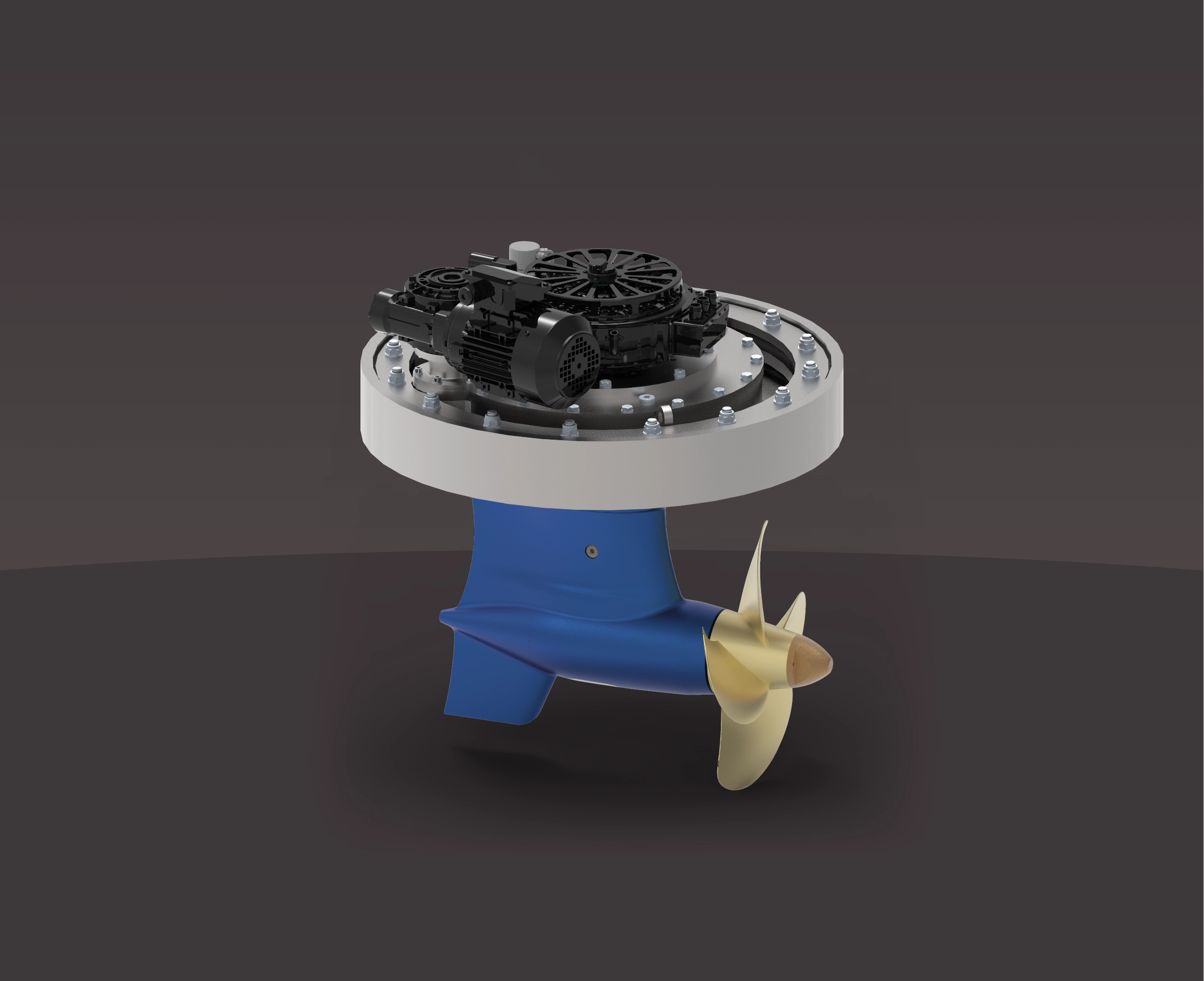
Open Propeller
Operating speed between 8-15 knotsAn open propeller is best when the vessel's speed is above 10 to 13 knots (18 to 24 km/h). The vessel speed determines the optimum propeller diameter. When the vessel speed is rather high, the propeller diameter will be smaller than when the vessel speed is lower.
Explore Open Propeller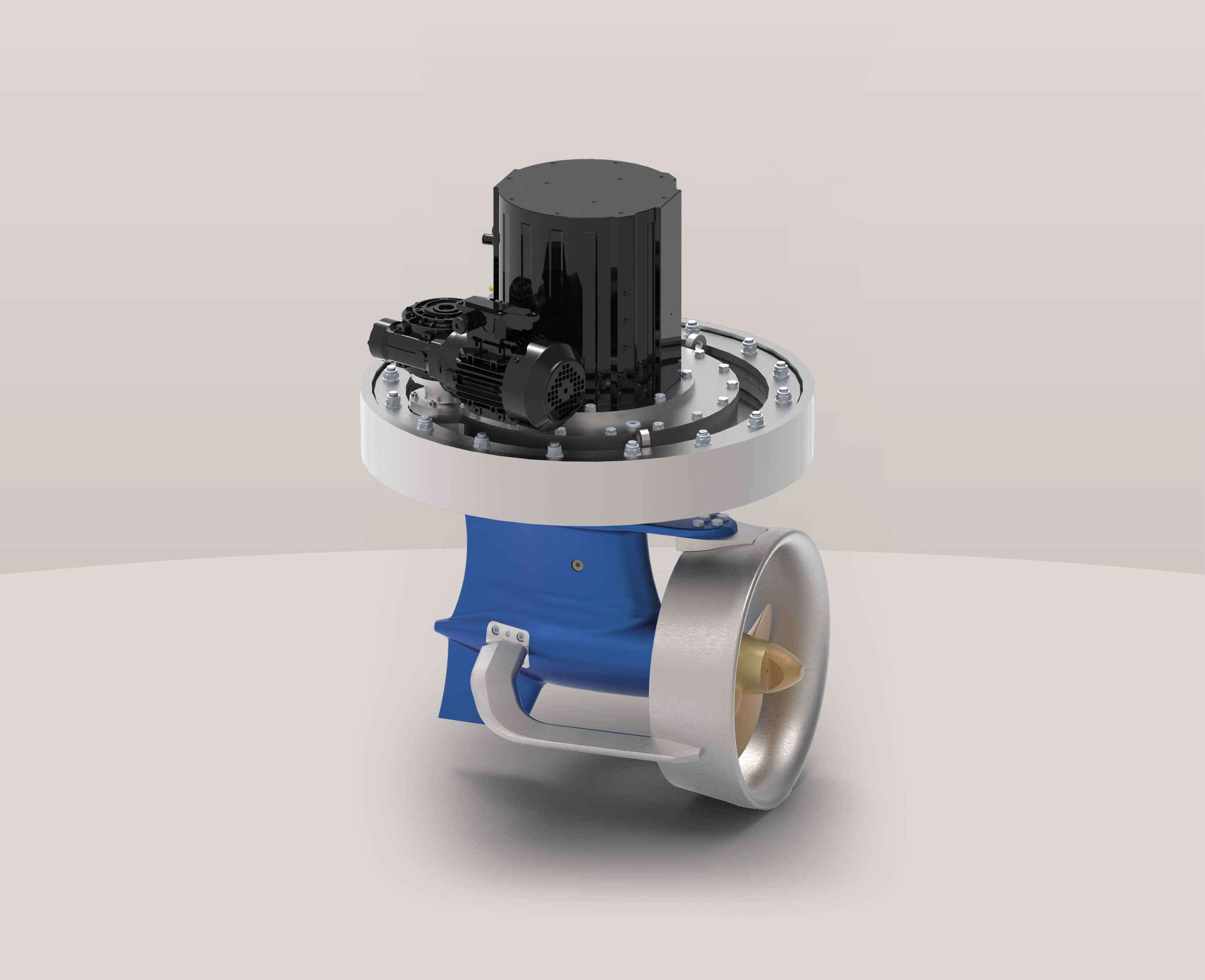
Ducted Propeller (Nozzle)
Operating speed between 0-10 knotsA ducted propeller is the best solution when the operating speed of the vessel is below 10 knots (18,5 km/h). Due to the shape of the nozzle around the propeller, it acts like an airplane wing, where the water speed around the wing shape generates extra thrust due to the ‘lift’ effect of the nozzle.
Explore Ducted Propeller (Nozzle)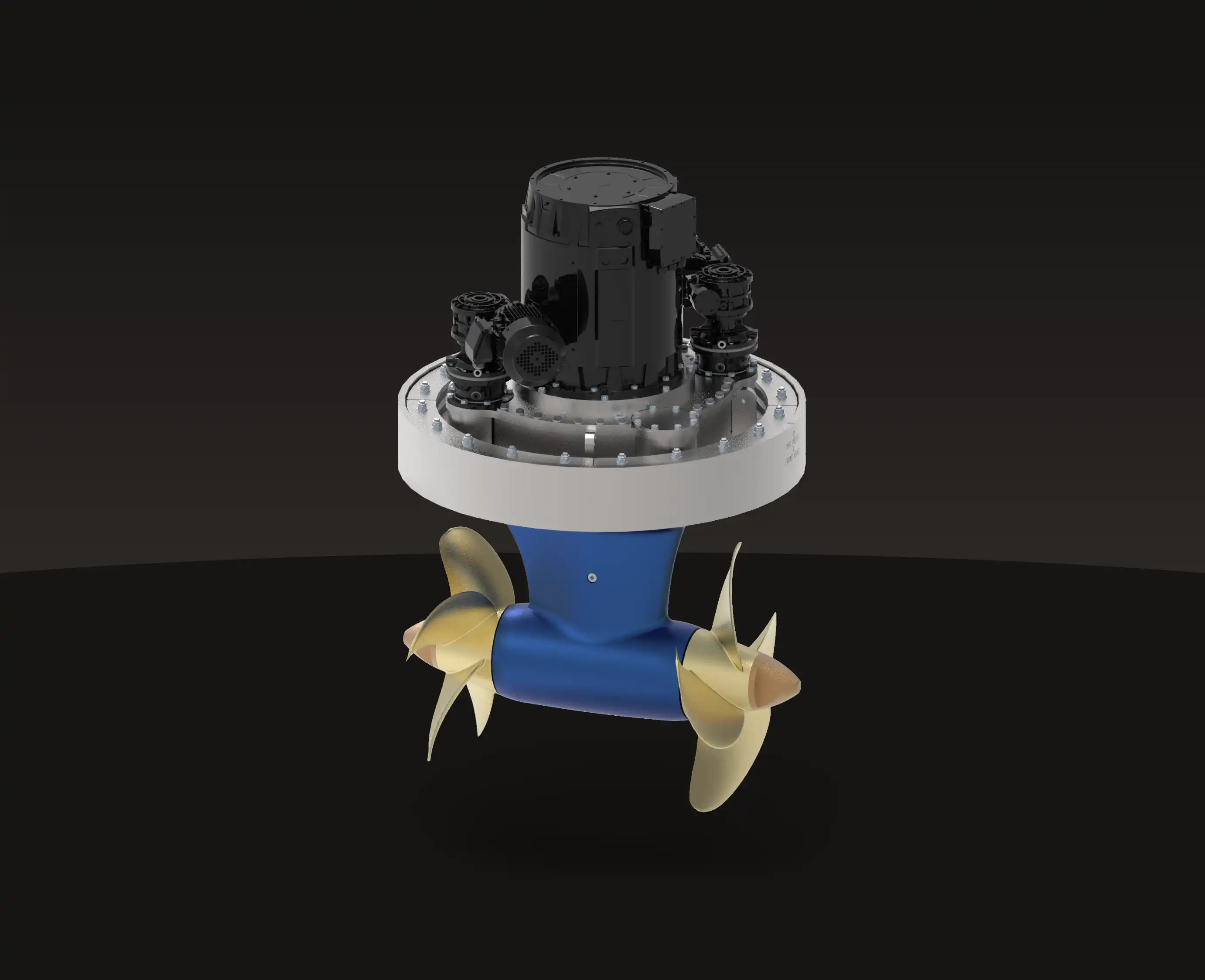
Counter Rotating Propellers (CRP)
Propellers rotating in opposite directionsWhen there is little space or a low vessel draught, Current Motion can deliver thrusters with counter rotating propellers (also called contra rotating propellers).
Explore Counter Rotating Propellers (CRP)References
Current Motion thrusters are already used in professional marine applications, including workboats and commercial vessels. Our references demonstrate how electric azimuth thrusters can improve maneuverability, reliability, and performance in real-life operations.

Gemeente Haarlem
View reference
Blue Boat
View referenceNeed advice on the right thruster?
Choosing the right thruster depends on your vessel, operating profile and performance requirements. Our team helps you determine the best configuration for your application.
FAQ
What is an azimuth thruster?
An azimuth thruster is a thruster that can rotate 360 degrees. It combines propulsion and steering, giving the vessel precise control and strong maneuverability.
When should I choose an azimuth thruster?
An azimuth thruster is a strong choice when your vessel needs precise manoeuvring, efficient propulsion and reliable control, especially at low speed or in confined spaces.
What is the difference between an azimuth thruster and a bow thruster?
An azimuth thruster provides propulsion and steering, while a bow thruster is mainly used to move the bow sideways during manoeuvring.
What is the difference between an open propeller and a ducted propeller?
An open propeller is typically better for vessels operating at higher speeds. A ducted propeller or nozzle is better suited for lower-speed applications where additional thrust is required.
Are Current Motion azimuth thrusters electric?
Yes. Current Motion focuses on electrically driven thrusters, suitable for electric and diesel-electric propulsion systems.
Can the thruster be customised for my vessel?
Yes. Current Motion designs thruster solutions around the specific requirements of the vessel, including power, propeller diameter, operating speed and integration.
For which vessels are azimuth thrusters suitable?
They are suitable for workboats, inland vessels, barges, yachts, professional vessels and other applications where manoeuvrability and efficient propulsion are important.
What power range is available?
Current Motion supplies thrusters up to 520 kW, depending on the configuration and vessel requirements.
Also part of Blokland Group:

Electrically driven thrusters for workboats, canal cruisers, yachts, and inland vessels.
Visit website

Cooling solutions for marine and industry
Visit website

High-tech propulsion systems
Visit website

Precision seals and propulsion components.
Visit website

Next level anti-fouling solutions.
Visit website

Reliable electric propulsion for builders of boats, tenders, and commercial shipping.
Visit website
